Novel Generative AI Model Enables Atomic-Scale Prediction of Protein-Protein Interactions
Date:2026-06-10
Accurate prediction of protein-protein interaction at structural level and precise manipulation of these interactions via protein design hold great potential in accelerating therapeutic development and solving unmet medical needs. With the rapid advances in protein delivery technologies such as adeno-associated virus (AAV) and mRNA lipid nanoparticle (LNP), it is increasingly feasible to deliver designed proteins, extracellularly or intracellularly, with tissue specificity.
While generative AI frameworks, including transformer and diffusion models, have accelerated de novo protein design targeting specific structural epitopes, most current approaches follow a top-down strategy: first generating an overall protein scaffold to fit a target site, then designing protein sequences to optimize binding.
In a new study published in Proceedings of the National Academy of Sciences (PNAS), Dr. Jing Yang, Dr. Junying Yuan, and Dr. James J. Chou at the Interdisciplinary Research Center on Biology and Chemistry, Shanghai Institute of Organic Chemistry, Chinese Academy of Sciences, introduces Void-X, a generative AI model adopting a bottom-up paradigm. Rather than designing entire protein shapes, Void-X directly generates atomic clusters optimized for tight packing against specified structural regions, establishing a physically grounded foundation for protein-protein interface design.
Void-X operates as an atomic filling model (AFM), trained to capture atomic-scale interaction patterns and fill atomic voids within protein interfaces (Figure 1). To train the model, the team curated over 8 million spherical atomic clustersfrom experimentally determined structures in the Protein Data Bank (PDB). In each cluster, approximately 30% of peripheral and spatially contiguous atoms are masked for generation while the remaining atoms are regarded as the context. With 172 million parameters, Void-X achieves predictive accuracies of 78.3%for intra-chain clusters and 68.2% for inter-chain clusters.
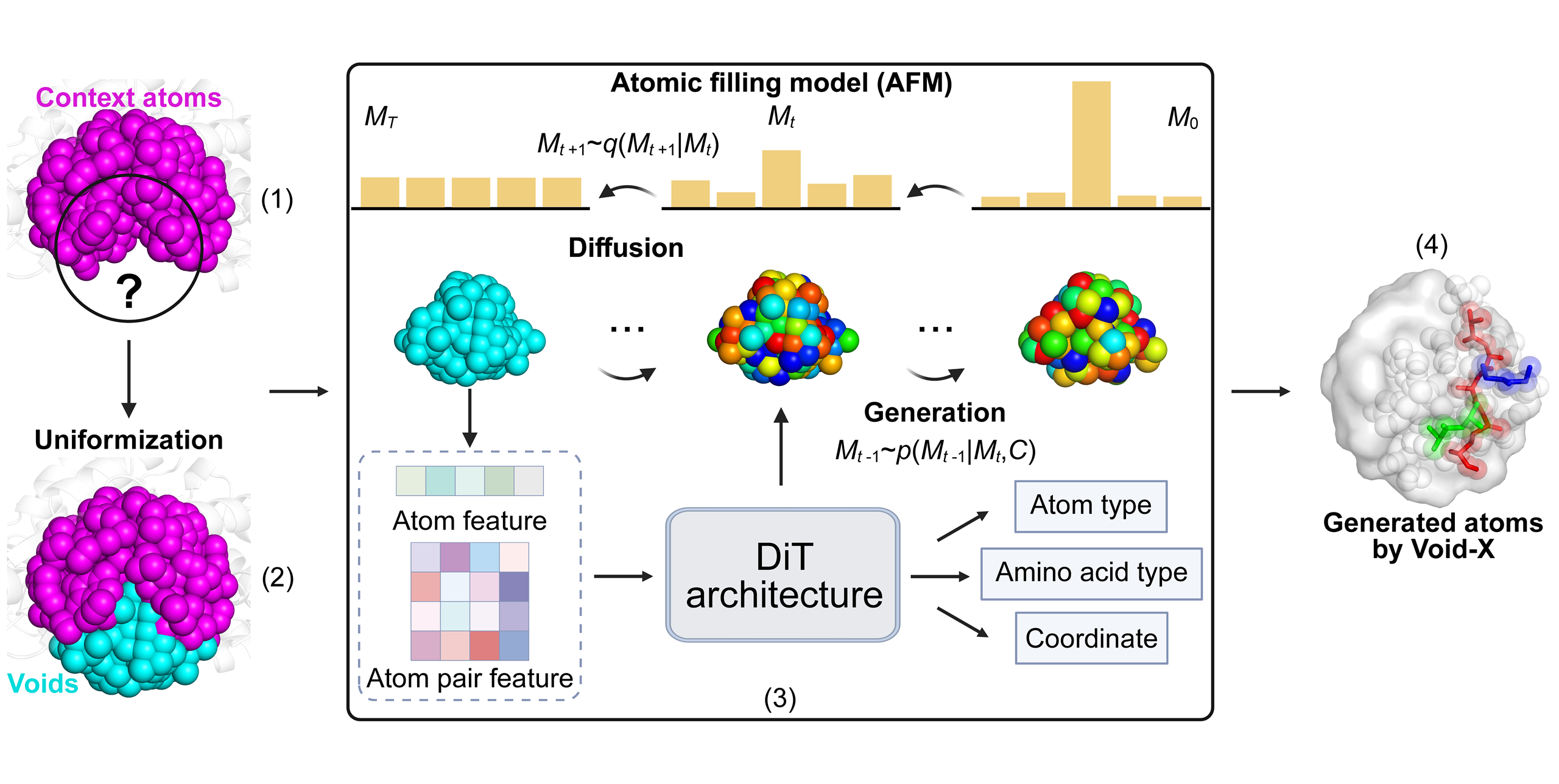
Figure 1. Flow diagram of Void-X model training for atomic void filling.
These capabilities enable de novo generation of atomic-resolution protein interactions, offering a complementary and physically intuitive route for protein design (Figure 2). By integrating atomic-level detail with generative modeling, Void-X expands the toolkit for rational design of biomolecular interfaces, with broad applications in drug discovery, synthetic biology, and beyond.
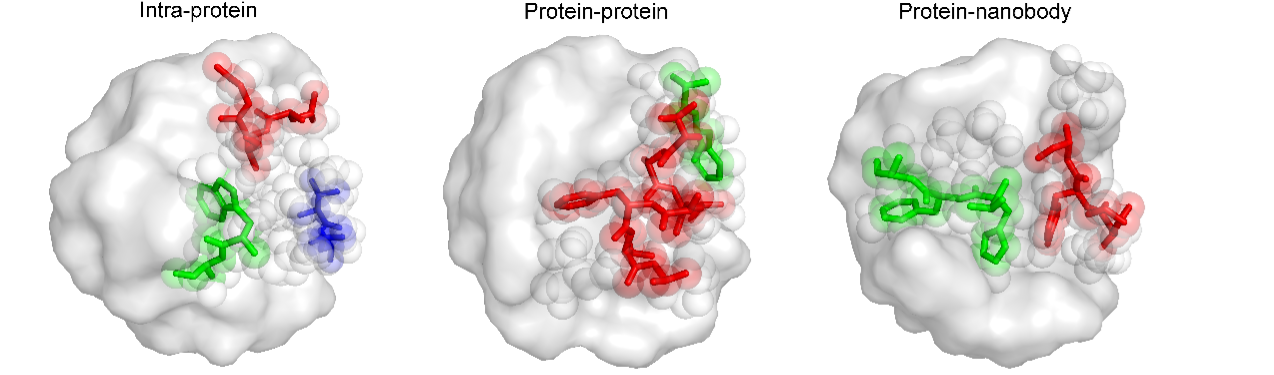
Figure 2. Examples of Void-X generated atom clusters with low information entropy. In general, these local structures consist of multiple amino acid fragments, and most predicted residues exhibit well-defined sidechain structures.
Article Link: https://www.pnas.org/doi/10.1073/pnas.2607035123
附件下载: