Xu Daichao’s Group Publishes Invited Review on Programmed Cell Death in Aging-Associated Diseases
Date:2026-07-16
Aging is the primary risk factor for major chronic illnesses, including Alzheimer’s disease, Parkinson’s disease, amyotrophic lateral sclerosis, type 2 diabetes, MASH and cancer. Aging-induced loss of cellular homeostasis initiates abnormal cell death and inflammaging. These interconnected processes form a vicious cycle aggravating tissue dysfunction. Programmed cell death (PCD), covering apoptosis, necroptosis and pyroptosis, sustains tissue homeostasis physiologically, while its dysregulation drives aging-related disease progression.
In a comprehensive review published in Cell Chemical Biology, Daichao Xu and colleagues at the Interdisciplinary Research Center on Biology and Chemistry, Shanghai Institute of Organic Chemistry, Chinese Academy of Sciences, map out the triggers and regulatory networks of these pathways, their contributions to aging-related pathologies, and the current state of clinical translation. Apoptosis proceeds through intrinsic mitochondrial (BCL-2 family) or extrinsic death-receptor routes, enabling clean cell clearance. Necroptosis, by contrast, is a lytic, caspase-independent process driven by the RIPK3–MLKL axis, which ruptures membranes and releases DAMPs to ignite inflammation; it can be triggered extrinsically by receptors like TNFR1 or intrinsically via ZBP1 sensing Z-nucleic acids. Pyroptosis features inflammasome (notably NLRP3) activation, where caspase-1 cleaves GSDMD to form membrane pores that release IL‑1β and IL‑18. Critically, the review underscores how post-translational modifications—ubiquitination, phosphorylation, and palmitoylation of RIPK1, alongside GSDMD modifications—precisely orchestrate these death switches.
In aging tissues, elevated necroptotic markers in fat and brain fuel systemic inflammation, while progeria sees nuclear RIPK1 trigger atypical necroptosis. In Alzheimer's disease, Aβ drives neuronal apoptosis via BIM–BAX, yet microglia primarily engage the ZBP1–RIPK1 axis to perpetuate neuroinflammation rather than cell death. In cancer, tumors epigenetically silence RIPK3 or downregulate ZBP1 to evade necroptosis, and exploit RIPK1 scaffolding for immune evasion; conversely, pyroptosis induced by granzymes or chemotherapy can elicit immunogenic cell death to boost antitumor responses.
Therapeutically, BH3 mimetics are advancing in oncology, while senolytics show early promise in age-related conditions. For necroptosis, the RIPK1 inhibitor GSK2982772 has undergone Phase II trials with modest efficacy, though brain-penetrant versions faced toxicity setbacks; newer agents and MLKL inhibitors are emerging. For pyroptosis, the NLRP3 inhibitor OLT1177 proved tolerable in heart failure and has entered Phase II for Parkinson's disease.
Despite progress, the review flags critical obstacles: pathway crosstalk risks compensatory activation, chronic inhibition may cause immunosuppression, CNS delivery remains difficult, and the absence of non-invasive biomarkers hinders patient stratification. To overcome these, the authors advocate combination strategies, targeting converging nodes like RIPK1 and ZBP1, and developing conformation-specific inhibitors. Crucially, they propose early prophylactic intervention in high-risk elderly groups—a geroprotective approach that could delay functional decline and reduce long-term drug risks.
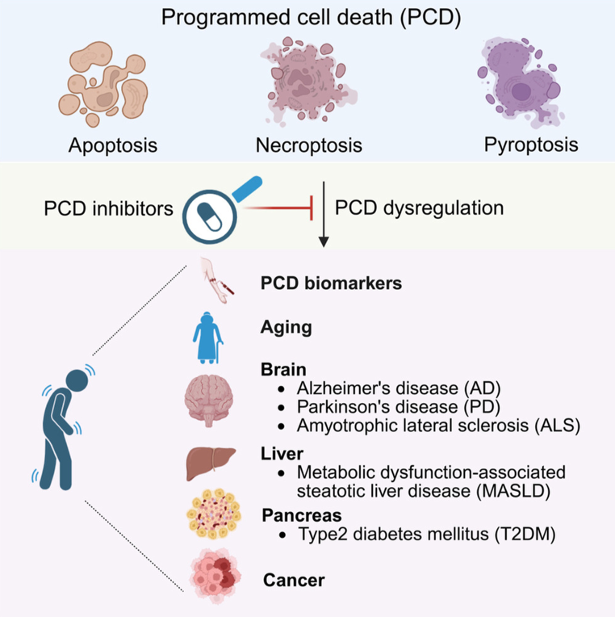
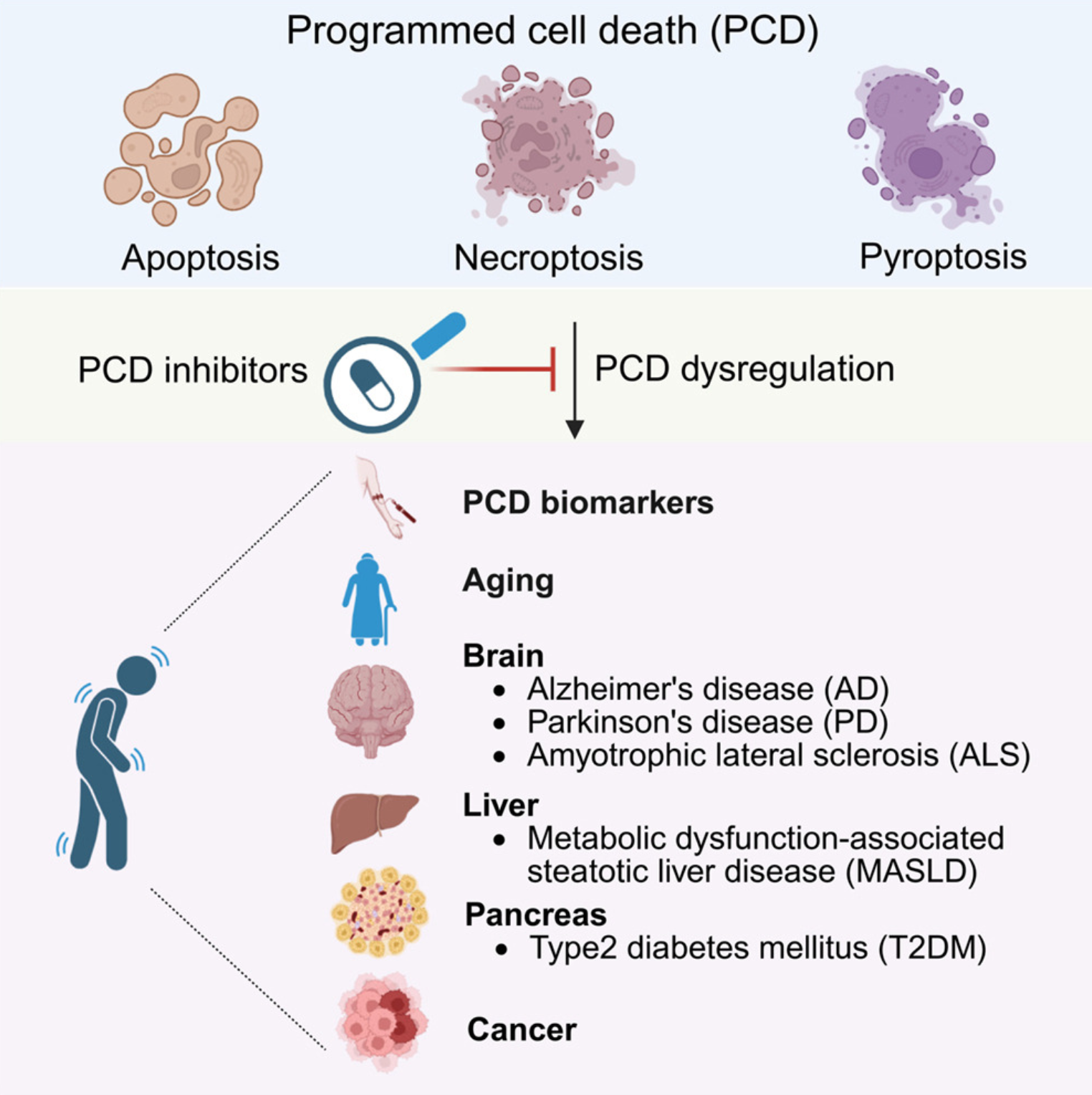
Figure 1. Graphical abstract of the review
This review systematically integrates recent advances in the field of programmed cell death, providing a comprehensive theoretical framework for understanding the pathogenesis of aging-related diseases and developing targeted therapeutic strategies. Professor Daichao Xu from the Interdisciplinary Research Center on Biology and Chemistry, Shanghai Institute of Organic Chemistry, Chinese Academy of Sciences, is the corresponding author, and Dr. Xingxing Xie is the first author. This work was supported by grants from the National Natural Science Foundation of China, the National Science Fund for Distinguished Young Scholars, the Shanghai Basic Research Pioneer Project, the Shanghai Municipal Science and Technology Major Project, and programs from the Chinese Academy of Sciences.
Article Link:
https://doi.org/10.1016/j.chembiol.2026.06.005
附件下载: