Cong Liu and Collaborators Reveal the Molecular Basis of Amyloid Fibril Assembly by Plant Seed Proteins
Date:2026-07-29
Amyloid fibrils are highly ordered aggregates formed through the self-assembly of proteins or peptides. They were first recognized in the brains of patients with neurodegenerative disorders, including Alzheimer's and Parkinson's diseases, and are closely associated with disease onset and progression. In recent years, however, a growing body of research has shown that many proteins derived from edible plants can also assemble into amyloid fibrils [1,2]. Seed storage proteins are abundant and constitute a major protein resource in plant-based foods. Although several seed storage proteins have been reported to form fibrils, important questions remain: Do proteins from different seeds differ in their propensity to form fibrils? How do environmental factors such as temperature and pH shape their assembly? And what are the atomic structural features of the resulting fibrils [3]?
A collaborative team led by Cong Liu at the Interdisciplinary Research Center on Biology and Chemistry, Shanghai Institute of Organic Chemistry, Chinese Academy of Sciences, and Bin Dai at the School of Automation and Sensing, Shanghai Jiao Tong University, has now addressed these questions in a study published in Nature Communications, entitled “Structural Basis of Amyloid Fibril Assembly by Plant Seed Storage Proteins.” The researchers systematically compared amyloid formation by seed storage proteins from oat, soybean and rice, and determined a high-resolution cryo-electron microscopy structure of oat globulin fibrils. Together, the findings provide a structural framework for understanding amyloid assembly by plant-derived proteins.
Published article: Structural Basis of Amyloid Fibril Assembly by Plant Seed Storage Proteins.
The team first compared fibril formation by major storage proteins in purified preparations and in intact seeds. Under defined acidic and high-temperature conditions, storage proteins from several plant sources formed fibrillar assemblies with characteristic amyloid features, but their assembly behavior differed markedly. Oat globulin and rice glutelin showed strong fibril-forming capacity in both purified protein and intact-seed systems. Soybean globulin, by contrast, formed fibrils mainly in the purified system, indicating that the complex molecular environment within a seed can modulate protein assembly.
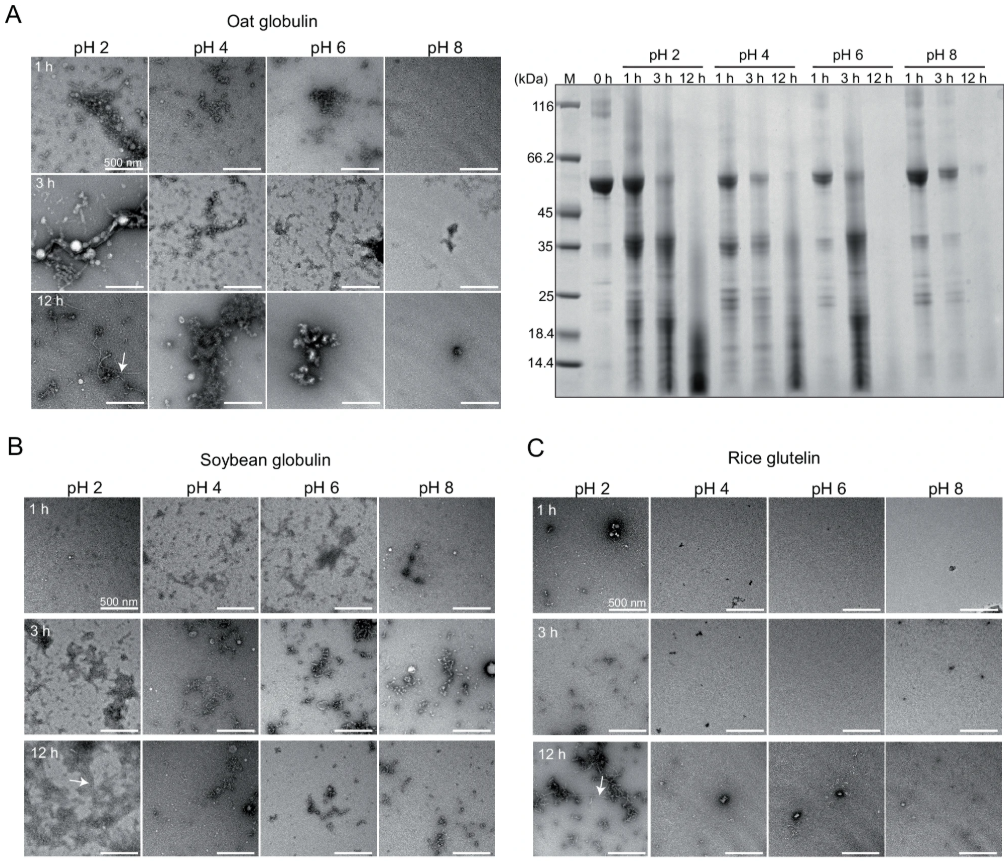
Figure 1 | Amyloid fibril formation and morphological characterization of plant seed storage proteins.
Focusing on oat globulin, the researchers determined the fibril structure by cryo-EM at 3.88 Å resolution. The fibril contains a compact, near-triangular core with approximate threefold symmetry. Hydrophobic contacts and stacking interactions among aromatic residues jointly stabilize the assembly. This structure reveals, at the molecular level, how a plant seed storage protein can form a highly ordered and stable amyloid architecture.
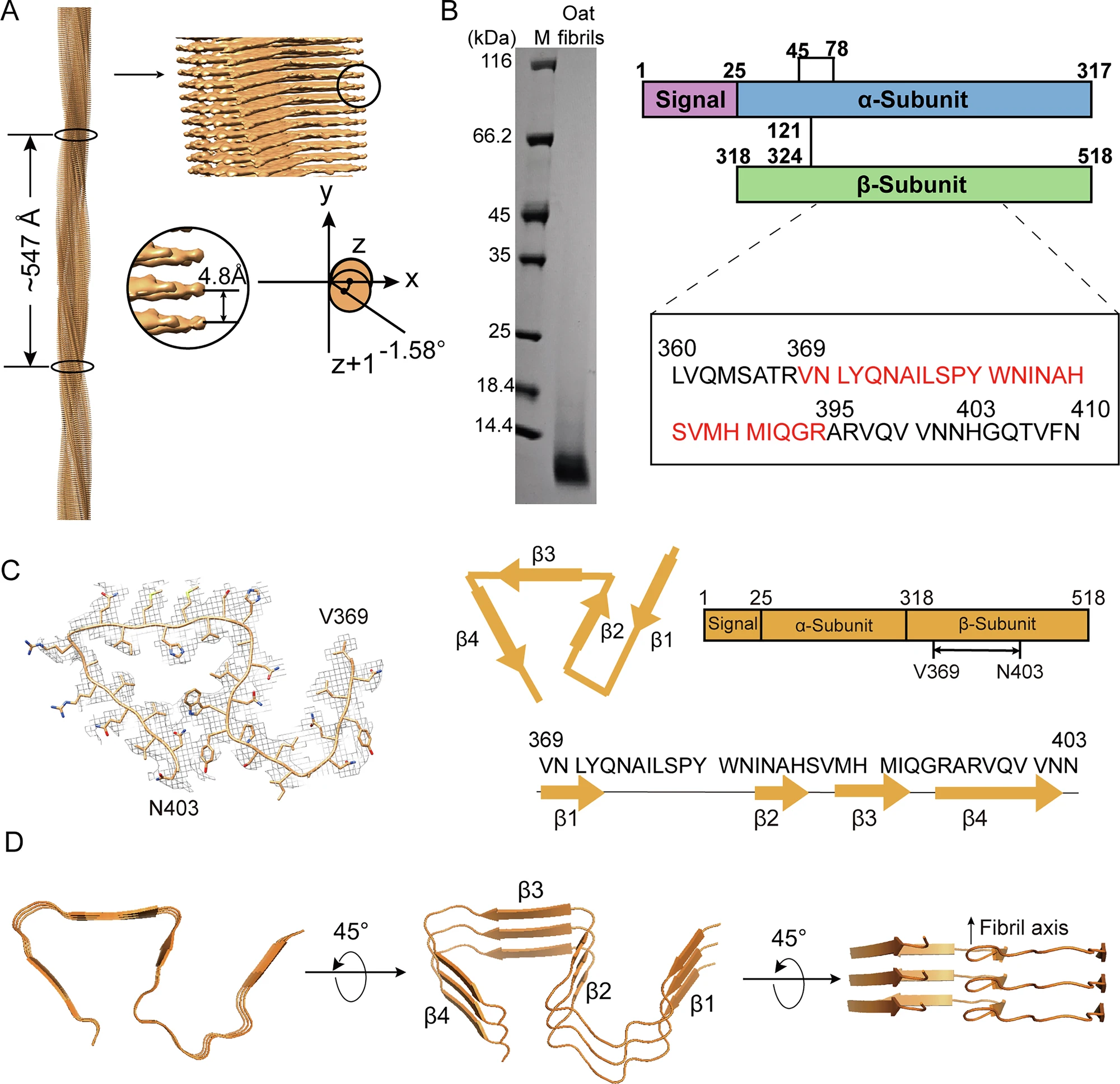
Figure 2 | High-resolution structure of the oat globulin amyloid fibril.
The researchers next asked whether plant-derived fibrils could influence the aggregation of disease-associated proteins. In vitro, oat globulin fibrils markedly promoted α-synuclein aggregation, produced only a modest effect on the low-complexity domain of FUS, and had no detectable effect on the low-complexity domain of TDP-43. Fibrils formed by soybean globulin or rice glutelin had little or no effect on these substrates. The selective enhancement of α-synuclein aggregation therefore indicates that oat globulin fibrils possess heterologous seeding activity in vitro.
Overall, this study extends high-resolution amyloid structural analysis beyond the disease-associated proteins that have traditionally dominated the field and into the realm of plant seed storage proteins. It demonstrates that plant-derived proteins can assemble into highly ordered amyloid structures, provides a structural perspective on the self-assembly of plant and food proteins, and raises the possibility that protein aggregates from different biological sources may engage in selective molecular interactions.
Cong Liu of the Interdisciplinary Research Center on Biology and Chemistry, Shanghai Institute of Organic Chemistry, Chinese Academy of Sciences, and Bin Dai of the School of Automation and Sensing, Shanghai Jiao Tong University, are co-corresponding authors. Yiling Zhang, a doctoral student at Shanghai Jiao Tong University, and Danni Li, a postdoctoral researcher at the Shanghai Institute of Organic Chemistry, are co-first authors. The study was supported by the National Natural Science Foundation of China, the Shanghai Shangsi Institute for Natural Sciences, and SANS.
Original article
https://www.nature.com/articles/s41467-026-76001-9
References
1. Cao Y, Mezzenga R. Food protein amyloid fibrils: Origin, structure, formation, characterization, applications and health implications. Adv Colloid Interface Sci. 2019;269:334–356.
2. Liang Y, Zhang P, Liu M, et al. Plant-based protein amyloid fibrils: Origins, formation, extraction, applications, and safety. Food Chem. 2025;469:142559.
3. Liu Y, Chen LY, Wu SZ, et al. Recent progress of plant protein-based amyloid-like nanofibrils. Food Hydrocolloids. 2025;160:110749.
附件下载: