Invited Review: Zhu and Colleagues Systematically Review the Applications of Ion Mobility–Mass Spectrometry in Metabolomics
Date:2026-11-25
Metabolite structural characterization and annotation remain major challenges in mass spectrometry-based metabolomics. High-resolution mass spectrometry has greatly expanded metabolome coverage and sensitivity, but mass spectrometry alone often cannot distinguish isobaric and isomeric metabolites, particularly stereoisomers. Ion mobility−mass spectrometry (IM−MS) addresses this limitation by adding an orthogonal gas-phase separation dimension, in which differences in molecular size, shape, and conformation are translated into measurable differences in ion mobility.
Recently, a comprehensive review entitled "Gas-Phase Structural Characterization of Metabolites by Ion Mobility-Mass Spectrometry" (https://doi.org/10.1021/acs.accounts.6c00748) was published online in Accounts of Chemical Research by Prof. Zheng-Jiang Zhu and colleagues at the Interdisciplinary Research Center on Biology and Chemistry (Shanghai Institute of Organic Chemistry, Chinese Academy of Sciences). This review systematically examines the evolution of IM–MS from an additional separation dimension toward a unique technology for gas-phase structural characterization of complex metabolome.
The review first examines conventional and emerging ion mobility technologies that enhance gas-phase resolving power and enable the separation of structurally related metabolites and isomers. Next, this review discusses collision cross-section (CCS) measurement, experimental databases, and computational prediction. In this context, the team pioneered machine learning-based CCS prediction in 2016 with the development of MetCCS. Building on this work, the team subsequently developed AllCCS by collecting and standardizing large-scale experimental CCS data from multiple platforms, enabling accurate CCS prediction and extending CCS coverage beyond the limitations of experimental measurements and available chemical standards to a much broader chemical space.
The integration of IM with LC–MS adds an orthogonal dimension of separation and structural information, enabling four-dimensional (4D) metabolomics by combining m/z, retention time (RT), CCS, and MS/MS spectra for comprehensive metabolite characterization (Figure 1). Building on this multidimensional analysis framework, this review then highlights the applications and advantages of this technology in metabolite structural annotation within complex metabolomes. In the AllCCS study, the team demonstrated that incorporating CCS into multidimensional matching substantially reduced the candidate space and improved the ranking of correct assignments, while also enabling the annotation of previously uncharacterized metabolites and expanding pathway-level coverage.
The review further highlights chemical derivatization as a complementary strategy to amplify subtle structural differences between isomers that are otherwise difficult to resolve by ion mobility alone. As an example, the team developed picolinic acid derivatization coupled with LC−IM−MS and machine learning to construct a four-dimensional sterol library covering 2165 sterol lipids. Derivatization enhanced both ionization and ion mobility differentiation, increasing the proportion of sterol isomer pairs with significant CCS differences from 38.0% to 67.2%.
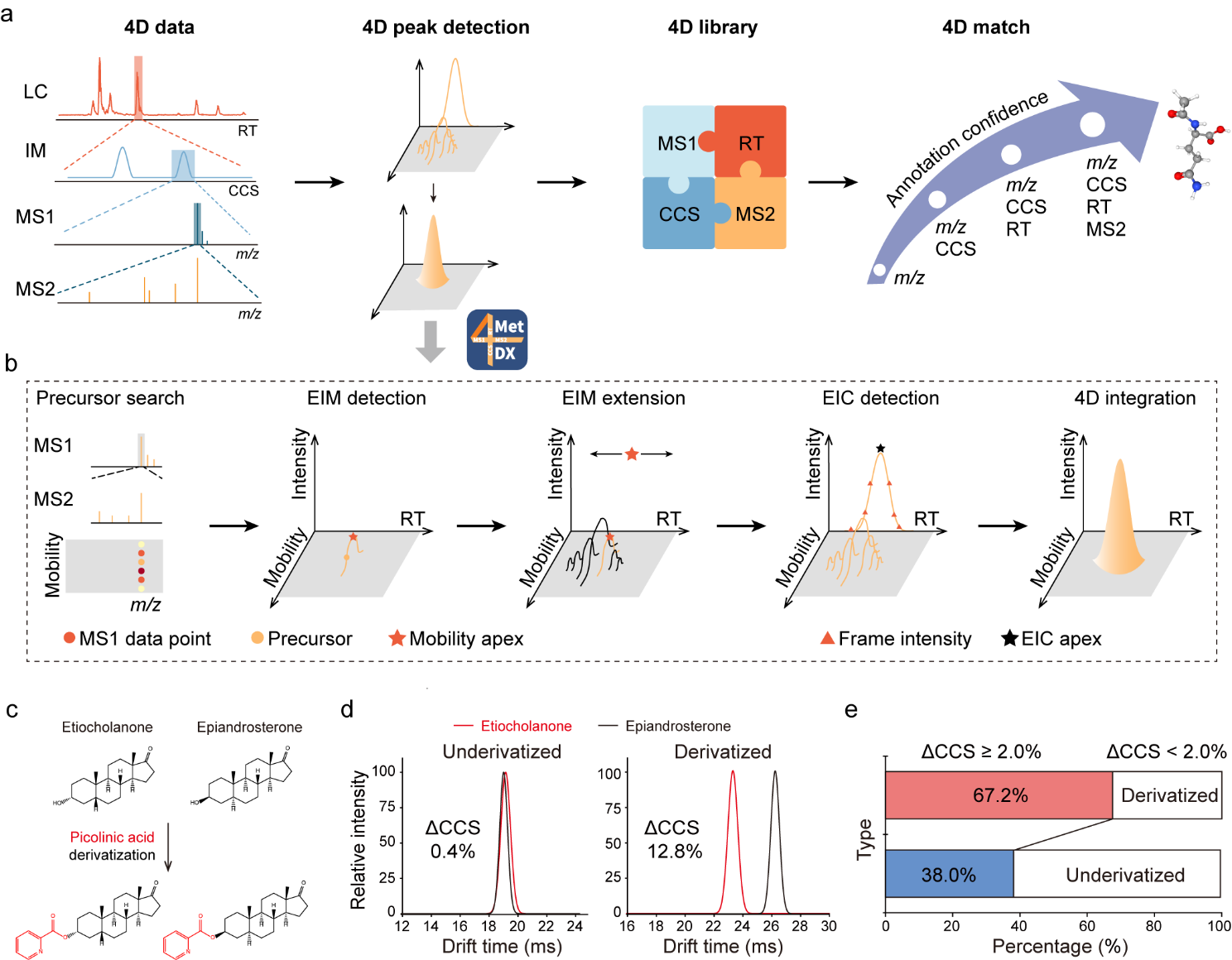
Figure 1.Overview of LC−IM−MS-based four-dimensional metabolomics.
Finally, this review examines the extension of IM−MS to spatial metabolomics and single-cell metabolomics. In particular, the team develop an ion mobility-resolved mass cytometry technology for single-cell metabolomics. By integrating ion mobility-enabled selective ion accumulation and cell superposition-based amplification strategies, this technology achieves high throughput while maintaining deep coverage, detecting over 5,000 metabolic peaks and annotating approximately 800 metabolites per cell.
Looking forward, the review identifies three key challenges that need to be addressed to advance the field: (1) achieving an appropriate balance among IM resolving power, acquisition speed, and metabolome coverage; (2) strengthening CCS as a robust and transferable structural descriptor; and (3) developing scalable computational approaches to handle growing data volumes and fully exploit the multidimensional nature of IM–MS data.
Prof. Zheng-Jiang Zhu (Interdisciplinary Research Center on Biology and Chemistry, Shanghai Institute of Organic Chemistry, Chinese Academy of Sciences) serves as the corresponding author, with Dr. Mingdu Luo as the first author. This work was supported by National Natural Science Foundation of China, the Shanghai Municipal Science and Technology Commission, the Shanghai Academy of Natural Sciences, and the China Postdoctoral Science Foundation, among other funding sources.
Article Link: https://doi.org/10.1021/acs.accounts.6c00748
附件下载: